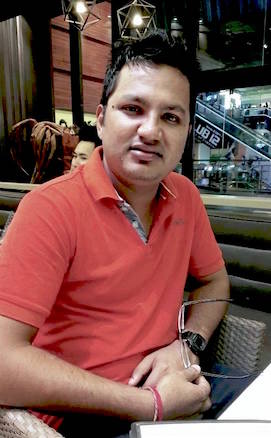
Shaveen Singh
BSc (USP) | MSc (USP) | GradCert Tertiary Teaching (USP) | PhD (Monash)
I am a Lecturer in the
School of Computer Science and Engineering (CSE)
at UNSW Sydney. My research lies at the intersection of learning analytics, human-computer interaction (HCI), and educational technology, with a particular focus on computational methods and information visualisation techniques for understanding how students learn and regulate their learning. I also draw on HCI and software engineering methods to design and develop educational technologies that enhance digital learning experiences.
Prior to joining UNSW, I was a Research Fellow at Monash University's
Centre for Learning Analytics at Monash (CoLAM)
,
working with
Professor Dragan Gašević
.
At CoLAM, I contributed to several research initiatives, including
FLoRA,
KMASS,
and
Data Analytics-Based Tools and Methods to Enhance Self-Regulated Learning
.
My broader research interests span learning analytics, self-regulated learning, AI in education and assessment, behavioural and predictive analytics, human–computer interaction (HCI), and computer science education.
I completed my PhD in Information Technology at Monash University under the supervision of Prof. Bernd Meyer and Assoc. Prof. Michael Wybrow. My doctoral research investigated how rich trace data capturing students' learning journeys and pathways can be explored through interactive visual interfaces, enabling educators to better understand learning behaviours, evaluate instructional design, and address complex educational needs.
My academic and professional experience spans more than a decade, with interests centred on data analytics, computational modelling, information visualisation, and the design and deployment of technologies for teaching and learning. I hold Bachelor's and Master's degrees in Computer Science from The University of the South Pacific in Fiji. Before pursuing an academic career, I worked as a Business Analyst – Finance & IT for a major regional food company operating across manufacturing, distribution, marketing, and sales in the Asia-Pacific region.
Contact: | Resume | Google Scholar | ORCiD |
Awards & Recognition 🏆
| 2025 | Best Demo Award — Polyfeed: A Student-facing Feedback Analytics Tool to Facilitate Feedback Processes , 15th International Conference on Learning Analytics & Knowledge (LAK25). |
| 2024 | Nominee, Vice-Chancellor's Excellence Awards — Research Team of the Year — Centre for Learning Analytics at Monash (CoLAM) . Team recognition. |
| 2024 | Winner, FIT Dean's Research Team of the Year Award — Centre for Learning Analytics at Monash (CoLAM) . Team award. |
| 2022 | Runner-up, Best Full Paper Award — Using Learner Trace Data to Understand Metacognitive Processes in Writing from Multiple Sources , 12th International Conference on Learning Analytics & Knowledge (LAK22). |
| 2022 | Finalist, R&D Excellence Award — Smart Linings for Pipe and Infrastructure , Australian Water Association (Victoria Branch). Project recognition. |
| 2021 | International Recognition — FLoRA project featured in the annual EDUCAUSE Horizon Report . Project recognition. |
| 2020 | Runner-up, Best Full Paper Award — UserFlow: A Tool for Visualising Fine-grained Contextual Analytics in Teaching Documents , ACM Conference on Innovation and Technology in Computer Science Education (ITiCSE 2020). |
| 2019 | AIED Conference Scholarship — awarded to attend the 20th International Conference on Artificial Intelligence in Education (AIED 2019), Chicago, USA. |
| 2017 | Honourable Mention, Project Award (2nd Place) — Australian Summer School on Data Visualization ( SummerViz 2017 ). |
| 2016 | Merit-Based Tuition Scholarship — Faculty of Information Technology, Monash University. |
| 2016 | Monash Graduate Scholarship (PhD) — Monash University. |
Selected Research & Software Projects (view all)
Research, EdTech & Industry Projects
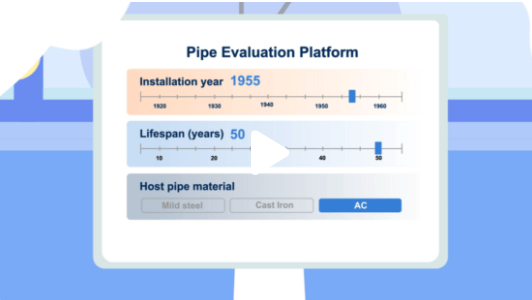 MPEP — Monash Pipe Evaluation Platform
Designed and developed MPEP, an industry-facing
decision-support platform for assessing pipe failure risk, evaluating pipe
condition, recommending suitable liner technologies, and estimating the
expected service life of rehabilitated pipes.
I contributed to the UI design, full-stack development, testing,
and deployment of the platform to the Water Services Association
of Australia (WSAA) infrastructure. MPEP was a key research translation
deliverable of the Australian Government-funded
CRC-P Smart Linings for Pipe and Infrastructure Project.
Recognition: The Smart Linings project was a
Finalist for the 2021 R&D Excellence Award,
presented by the Australian Water Association (Victoria Branch).
Project Overview
·
MPEP Platform
·
Project Report
·
Video
·
Demos
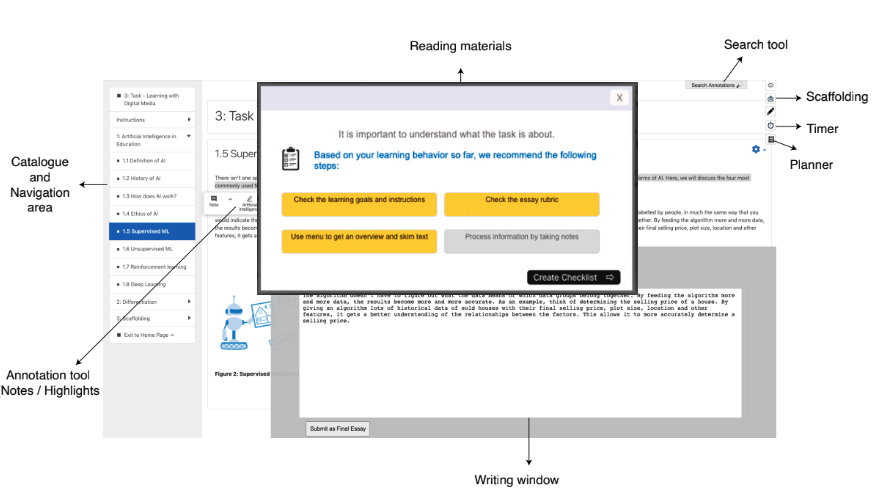 FLoRA — Personalised Support for Self-Regulated Learning
Led the development of FLoRA, a research platform designed
to investigate and support students' self-regulated learning through
personalised scaffolds and learning analytics.
The international project involved Monash University, Radboud
University, the University of Edinburgh, and the Technical University of
Munich. FLoRA was deployed across five countries
and used by 2,000+ students.
Recognition: Selected for the
2021 EDUCAUSE Horizon Report as one of six technologies
and practices identified from 141 nominations as having significant
potential to influence the future of higher education teaching and learning.
Project Website
·
FLoRA Platform
·
News Coverage
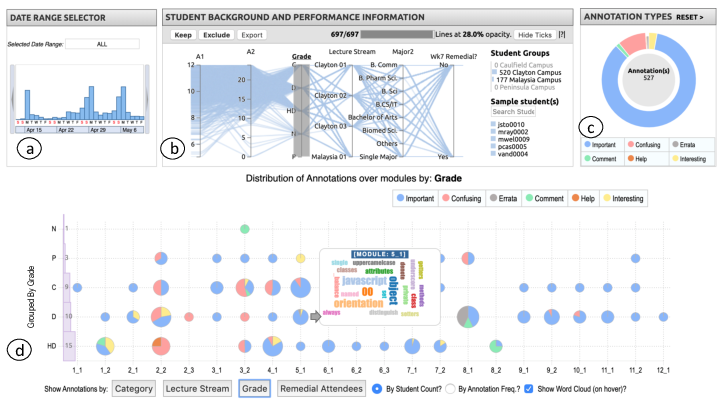 LearnerFlow — Instructor-Facing Learning Analytics Dashboard
Designed and developed LearnerFlow as part of my doctoral
research to help educators explore fine-grained student interaction data
and evaluate learning designs through interactive visual analytics.
The platform was piloted across two Monash University courses
involving approximately 1,500 students, providing instructors
with insights into students' learning pathways and interactions with
digital learning resources.
Recognition: Research arising from this project received
a Runner-up Best Full Paper Award at ACM ITiCSE 2020.
Project Website
·
Publication
 Early Warning System (EWS) — Learning Analytics for Student Support
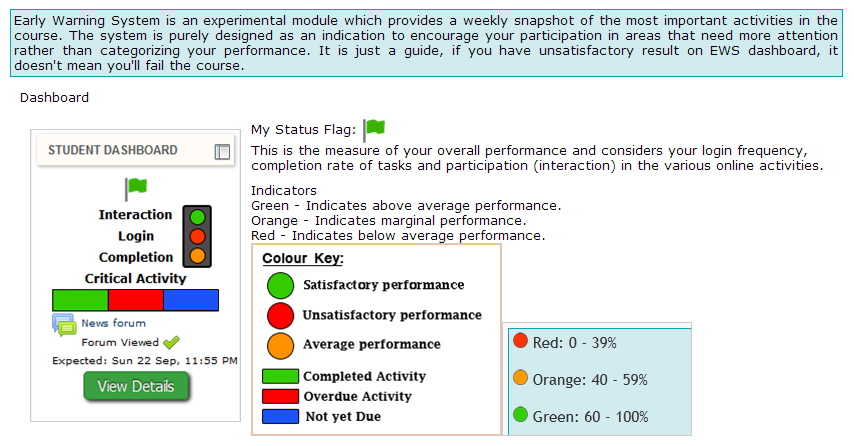
Conceptualised and developed the first version of an
Early Warning System (EWS) as part of my Master's research
at the University of the South Pacific. The system used student trace data
to identify early indicators of academic risk and support timely interventions.
The system was subsequently implemented across
16 courses involving 3,500+ students at USP between
2013 and 2016.
Research Impact: The implementation and impact of the
project were subsequently reported in
Studies in Higher Education
.
Project Website
·
Features
·
VC Forum Presentation
Work Experience
| Jul 2025 - Now | University of New South Wales, Sydney, Australia |  |
| Lecturer - School of Computer Science and Engineering (CSE), UNSW Sydney | ||
| Jun 2020 - Jun 2025 | Monash University, Melbourne, Australia | |
| Research Fellow - Centre of Learning Analytics, Faculty of Information Technology | ||
| Mar 2020 - Nov 2021 | Monash University, Melbourne, Australia |  |
| Research Assistant/Developer (Part-time) - Department of Civil Engineering | ||
| Jul 2017 - Jun 2020 | Monash University, Melbourne, Australia | |
| Sessional Lecturer [FIT5211, FIT5145, FIT1043], Faculty of Information Technology | ||
| Feb 2016 - Nov 2019 | Monash University, Melbourne, Australia | |
| Teaching Associate, Faculty of Information Technology | ||
| Jul 2011 - Jan 2016 | The University of the South Pacific, Suva, Fiji Islands |  |
| Subject Coordinator - School of Computing, Information & Mathematical Sciences | ||
| Mar 2006 - Jun 2011 | The University of the South Pacific, Suva, Fiji Islands | |
| Tutor in CS/IS - School of Computing, Information & Mathematical Sciences | ||
| Dec 2004 - Mar 2006 | Goodman Fielder International (Fiji) Ltd |  |
| Business Analyst - Finance & IT |
Curriculum, Assessment & Educational Innovation
1. National Curriculum Development — Fiji Ministry of Education
Role: National Curriculum Working Committee Member & Textbook Co-author
Appointed to the National Curriculum Working Committee to contribute to the
review and development of the Year 11 and Year 12 Computer Studies
curriculum for Fiji secondary schools. The role included curriculum
review and co-authoring the national Computer Studies textbooks published by
the Ministry of Education.
 Computer Studies — A Textbook for Year 12
Ministry of Education, Fiji, 2014.
Repository
·
Author Credit
·
Online Copy
 Computer Studies — A Textbook for Year 11
Ministry of Education, Fiji, 2013.
Repository
·
Author Credit
·
Online Copy
2. Digital Learning & Online Course Development
 Introductory Python & Data Visualisation Course
Designed and developed a collection of hands-on learning materials for
teaching Python programming and data visualisation, with
content progressing from introductory to intermediate concepts.
Components of the learning materials were also used during my doctoral
research to support studies involving student learning behaviours and
computational modelling.
Course Library
3. Research Skills Development (RSD) in Assessment Design
 University Exemplar — Research Skills Development in Assessment
Integrated the
Research Skills Development (RSD) framework
across the major assessments of UU100: Communication and Information
Literacy at the University of the South Pacific.
The assessment design explicitly embedded research skill development
throughout the course, enabling students to progressively develop and
demonstrate research capabilities through their assessed work.
Recognition: The course was selected as
one of four model courses at USP for its implementation
of the RSD framework.
RSD Implementation
·
VC Forum Presentation
4. Industry-Based & Work-Integrated Learning
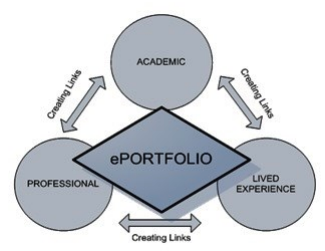 Industry–Academia Partnership & Work-Integrated Learning
Led the design and implementation of an industry-based learning initiative
at the University of the South Pacific for the newly introduced
Bachelor of Software Engineering and
Bachelor of Net-Centric Computing programmes.
Designed CS001: Foundation of Professional Practice,
incorporating portfolio-based assessment and a
12-week industry mentorship programme to provide students
with authentic professional experience. The initiative involved developing
assessment criteria, terms of reference, industry partnerships, training
workshops, and course coordination.
The curriculum was aligned with professional expectations informed by the
Australian Computer Society (ACS)
and the
Skills Framework for the Information Age (SFIA)
.
Impact: The initiative contributed to embedding
work-integrated learning and professional skills development within the
two computing degree programmes, which subsequently achieved
ACS accreditation.
Project Paper
·
ACS Accreditation